EDP vs EDT: What the Difference Really Means for You
Eau de Parfum and Eau de Toilette differ primarily in fragrance oil concentration, and that single variable shapes everything else: how long the scent lasts, how it projects, how it feels on your skin, and what you pay for it.
EDP (Eau de Parfum): 15–20% fragrance oil, lasts 5–8+ hours, richer and fuller scent profile, higher price point, gentler on sensitive or dry skin
EDT (Eau de Toilette): 5–15% fragrance oil, lasts 3–5 hours, lighter and fresher character, more budget-friendly, easier to reapply throughout the day
Occasion fit: EDT excels in daytime, office, and warm weather settings; EDP suits evenings, cooler climates, and occasions where you need lasting wear without reapplication
Skin suitability: EDP’s lower alcohol content makes it the preferred choice for sensitive or dry skin
Price logic: EDP costs more per bottle but often requires fewer daily applications, narrowing the real cost gap
Neither format is superior. They are complementary tools, each calibrated for a different wearing context.
How fragrance oil concentration shapes longevity and intensity
Concentration is the single most predictive variable in how a fragrance performs on your skin. The more fragrance oil dissolved in the alcohol base, the longer the scent persists and the more fully it develops through its top, heart, and base notes.
Fragrance Type | Fragrance Oil Concentration | Typical Longevity | Ideal For |
Eau de Cologne (EDC) | 2–5% | 2–3 hours | Casual, warm weather |
Eau de Toilette (EDT) | 5–15% | 3–5 hours | Daily wear, office, summer |
Eau de Parfum (EDP) | 15–20% | 5–8+ hours | Evening, all-purpose, cooler weather |
Parfum / Extrait | 20–40% | 8–24 hours | Special occasions, maximum depth |
Concentration ranges are industry conventions, not legally enforced standards. A brand’s intense EDT can outperform another house’s EDP, depending on raw materials and formula construction.
EDT tends to highlight freshness, lift, and movement. Think citrus, aromatic herbs, and transparent musks. EDP offers fuller, rounder scents with richer notes like amber, vanilla, and woods, giving it more presence through the mid and base stages of wear.
Formulation matters as much as concentration. An EDT built on heavy base notes like musks or woods can outlast an EDP composed of light, volatile citrus notes. The label tells you the starting point, not the full story.

Projection and longevity are also distinct measurements. EDT may project well initially but fade sooner, while EDP tends to last longer but can sit closer to the skin in some formulations. Understanding that distinction helps you choose for the experience you actually want, not just the number on the bottle.
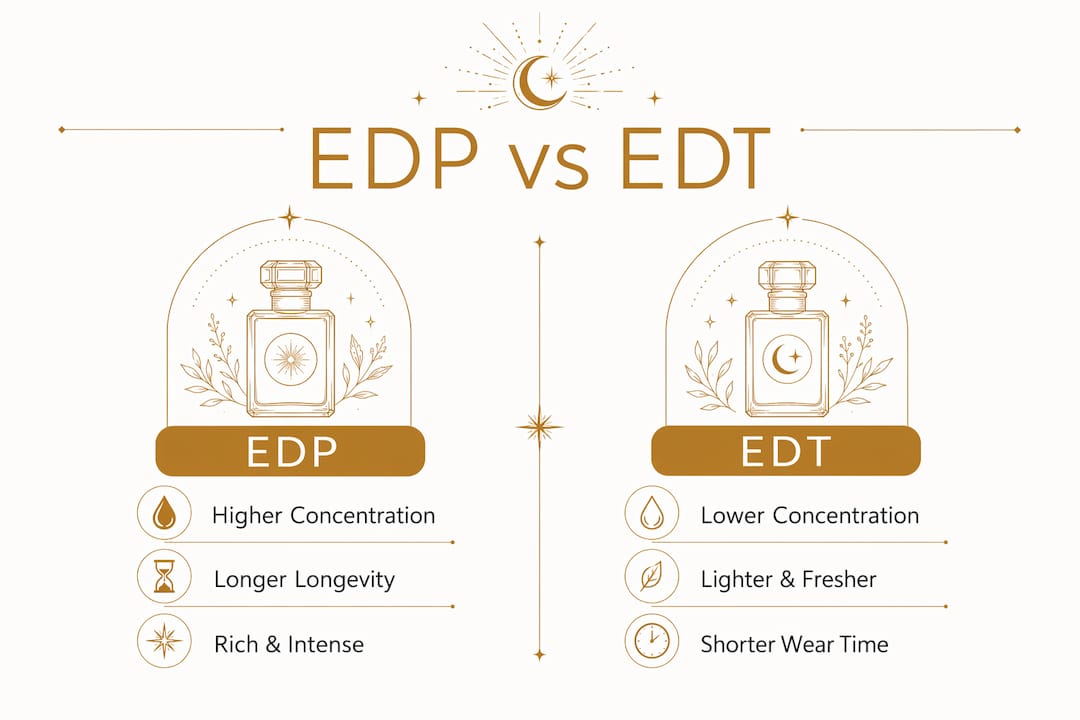
Pros and cons of EDP vs EDT
Choosing between eau de parfum and eau de toilette comes down to your lifestyle, skin type, and the context you’re dressing for. Each format has genuine strengths.
Advantages of EDP:
Richer, more complex scent that evolves meaningfully from top notes through the drydown
Longer wear time, often covering a full workday and into the evening without reapplication
Less alcohol content makes it gentler on sensitive or dry skin
Better suited to cooler weather and formal occasions where presence matters
More cost-effective per wear despite the higher upfront price
Advantages of EDT:
Lighter, airier character that feels natural in warm weather and professional settings
Lower price point makes it an easier entry for trying a new scent
Ideal for daytime and office wear where a subtler scent is more considerate of shared spaces
Easier to layer or reapply without overwhelming
Fresh, crisp profiles that pair naturally with citrus and floral compositions
Drawbacks to weigh:
EDP can feel too dense in summer heat or close indoor environments
EDT may fade before the end of a long day, requiring a midday refresh
EDP costs more per bottle than the EDT version of the same scent, though the per-wear cost difference is smaller than the shelf price suggests
How to choose between EDP and EDT for your life
The most useful frame is not “which is stronger” but “which fits the moment.” Occasion, climate, and your own skin chemistry all shape the answer.
Match concentration to context. EDT is the natural pick for warm weather, daytime wear, and environments where you share close space with others. EDP earns its place in the evening, in cooler months, and on occasions where you want your fragrance to carry through a long event without a refresh.
Factor in your skin. Dry or sensitive skin tends to absorb fragrance oil faster, which can shorten wear time regardless of concentration. EDP’s higher oil content and lower alcohol ratio often perform better on these skin types, projecting more consistently across the day.
Consider projection versus longevity separately. A lighter EDT can project brightly in its opening hour, then settle close to the skin. An EDP may feel less immediately loud but sustain a fuller presence for hours. Decide which phase of the wearing experience matters most to you.
Pro Tip: Before committing to a full bottle, test both the EDT and EDP versions of the same fragrance on your skin and wear each for a full day. The same scent can read noticeably different between formats, and the version that opens beautifully on paper may develop differently on your skin chemistry.
Layering is another option worth exploring. An EDT worn over a matching scented body lotion can extend its staying power without the density of a full EDP application. This approach works especially well with fresh, floral, or citrus-forward compositions.
The full fragrance concentration spectrum, explained
EDP vs EDT. How they sit within a broader hierarchy of fragrance formats, each with its own aromatic intensity and wearing character. Understanding the full spectrum helps you see these two formats as style tools rather than a quality ranking.
Eau de Cologne (EDC): Roughly 2–5% oil. The lightest mainstream format, built for a bright, citrus-led splash that refreshes rather than lingers. Fades within a couple of hours.
Eau de Toilette (EDT): Roughly 5–15% oil. The everyday workhorse. Fresh on application, settles into a skin scent after a few hours, and suits anyone who prefers fragrance that feels easy rather than intense.
Eau de Parfum (EDP): Roughly 15–20% oil. The most common strength for modern designer launches. Rich enough to last, wearable enough for daily use, and the format most reviewers treat as the flagship version of a scent.
Parfum: Roughly 20–30% oil. Denser and longer-lasting, often released as an “elixir” or “intense” flanker. Suits amber, vanilla, leather, and oud-heavy compositions especially well.
Extrait de Parfum: 20–40% oil. The most concentrated format, applied in small amounts, often dabbed rather than sprayed. Wears closer to the skin with a gradual, nuanced unfolding of notes.
Concentration labels are conventions, not strict legal standards. One brand’s EDP may overlap in oil percentage with another brand’s Parfum. What the label signals is a style of wearing experience, not a guaranteed performance benchmark. A fragrance that blossoms into a highly personal variation on your skin depends as much on ingredient volatility and your own chemistry as it does on the percentage printed on the box.
How My Soul Frequency takes personalization beyond the label
Most fragrance decisions stop at choosing a concentration. My Soul Frequency™ starts there and goes much further. The brand’s numerology-based custom perfume process derives each scent mathematically from your date of birth, treating your personal life matrix as the actual formulation input.
Here is how the process works:
Birth date numerology: Your date of birth is processed through a proprietary algorithm that identifies your personal frequency profile, which then informs the aromatic composition weight and note selection of your fragrance.
Frequency type selection: You choose from seven distinct frequency types, including Signature, Abundance, Attraction, and Life Path & Purpose, each calibrated to a different energetic intention.
Wear time choice: You select your preferred concentration, EDT, EDP, or Parfum, so the same numerological formula can be expressed at the aromatic intensity that fits your lifestyle.
Handcrafted individually: Every perfume is made for one person and never pre-made. No two bottles are identical, because no two birth dates produce the same formula.
Quality standards: Made in the USA, paraben-free, and phthalate-free, with sizes from 15ml to 100ml starting at $49.99 and backed by a 30-day money-back guarantee.
The result is a fragrance that functions as a literal physical manifestation of your personal life matrix, not a mass-produced scent that thousands of others wear. When you understand the difference between EDP and EDT, you can make that concentration choice with full intention, knowing the formula beneath it was built specifically for you.
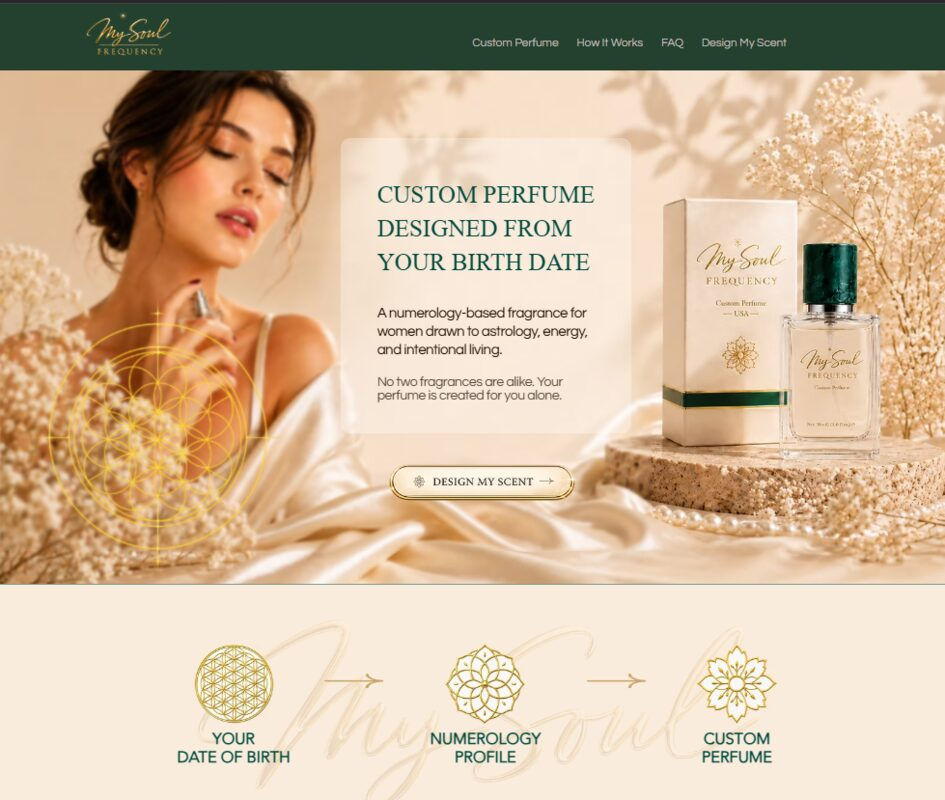
If you’ve spent time comparing fragrance formats and still feel like nothing off the shelf quite fits, that feeling has a name. My Soul Frequency™ was built for exactly that moment. Explore your custom fragrance and discover what a scent derived from your own numbers actually smells like on your skin.
Key Takeaways
EDP and EDT differ in fragrance oil concentration, which drives longevity, intensity, and price, but formulation and skin chemistry shape real-world performance just as much as the label.
Point | Details |
Concentration defines the baseline | EDP holds 15–20% fragrance oil; EDT holds 5–15%, setting their respective longevity and intensity. |
Longevity follows concentration | EDP typically lasts 5–8+ hours; EDT lasts 3–5 hours, often needing a midday refresh. |
Occasion guides the choice | EDT suits daytime, office, and warm weather; EDP fits evenings, cooler climates, and long events. |
Formulation can override concentration | An EDT with heavy base notes can outlast an EDP built on light, volatile citrus notes. |
Labels are conventions, not guarantees | Concentration ranges vary by brand; test on your own skin before committing to a full bottle. |
Recommended